Imagine a shopper standing in the middle of a high-end electronics store in Mumbai, smartphone in hand, comparing features for a flagship OLED TV. At that exact moment, a sleek digital screen above the aisle displays a limited-time exchange offer for your brand. Simultaneously, a push notification hits their phone from the retailer’s app, offering a bundled soundbar deal.
This isn’t just advertising; it is a synchronized, high-intent intervention at the precise moment of decision.
In the rapidly evolving landscape of Retail media networks India, this level of integration is no longer a luxury: it is the standard. For FMCG, consumer electronics, and retail brand directors, the challenge is no longer just "being seen." The challenge is being seen where the wallet is open.
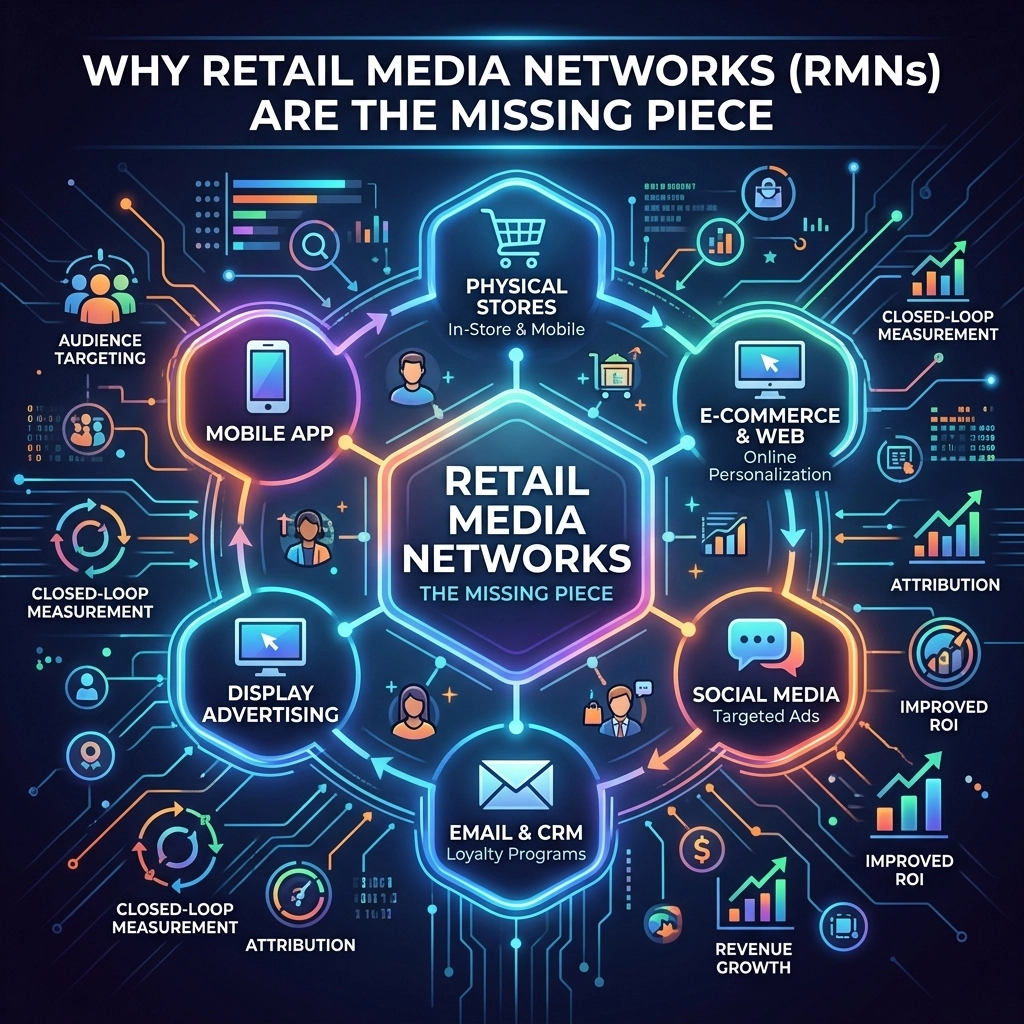
Retail Media Networks (RMNs) are the definitive solution to the fragmentation of the modern shopper journey. They represent the "third wave" of digital advertising, following the search and social revolutions, and they are the missing piece in your omnichannel retail marketing strategy.
What Exactly is a Retail Media Network?
At its core, a Retail Media Network is an advertising ecosystem owned by a retailer that allows brands to purchase advertising space across all the retailer’s digital and physical touchpoints. This includes e-commerce media buying (sponsored search on apps), in-store advertising (digital signage, shelf talkers), and even off-site placements powered by the retailer’s first-party data.
In India, we are seeing a massive surge in RMN adoption. From the digital giants like Amazon and Flipkart to the physical retail powerhouses like Reliance Retail and Tata Consumer Products, the ability to close the loop between an ad impression and a sale is the ultimate value proposition.
By leveraging Retail media networks India, your brand moves away from the "spray and pray" model of traditional media and toward a point of sale advertising strategy that is rooted in real-time transaction data.

The Core Value Proposition: Why RMNs Are Non-Negotiable in 2026
The advertising industry is facing a "signal loss" crisis. With the deprecation of third-party cookies and increasing privacy regulations, traditional digital targeting is becoming less effective. RMNs solve this by using first-party data.
1. High-Intent Targeting with Unified Data
Unlike social media browsing, which is often passive, a shopper on a retail platform is there to buy. RMNs allow you to target users based on their actual purchase history, loyalty program status, and real-time search queries. This is the difference between showing a diaper ad to "parents" (interest-based) and showing it to someone who bought baby wipes three days ago (intent-based).
2. The "Closed-Loop" Measurement Advantage
One of the biggest frustrations for CMOs is the "attribution gap." You know your billboard in Delhi NCR worked, but how many sales did it specifically drive at the local supermarket? RMNs offer closed-loop environments. Because the retailer owns both the ad space and the checkout counter, they can tell you exactly how many people saw your ad and then bought the product: online or offline.
3. Precision Point of Sale Advertising
The physical store is still where the majority of Indian retail transactions happen. In-store advertising through RMNs allows you to influence the shopper when they are physically inches away from your product. Whether it’s a smart screen in the FMCG aisle or a branded kiosk in a Bengaluru mall, RMNs bridge the gap between digital awareness and physical conversion.
For brands looking to master these physical touchpoints, understanding how to create an effective public awareness campaign can provide a blueprint for moving consumers from interest to action.
The Evolution: RMN Strategy 2026
As we look toward an RMN strategy 2026, the focus is shifting from simple banner ads to 360-degree brand experiences. The future of retail media is "Phygital": a seamless blend of physical presence and digital intelligence.
Programmatic DOOH Integration
Digital Out-of-Home (DOOH) is becoming a core component of RMNs. Imagine your programmatic ads appearing on screens in malls and transit hubs, triggered by local inventory levels or time of day. This is making outdoor advertising as trackable as digital, allowing for unprecedented flexibility in your budget allocation.
AI-Driven Personalization at Scale
By 2026, AI will curate individual "storefronts" for shoppers. If a customer is known to prefer eco-friendly electronics, the RMN will prioritize your sustainable product line across all touchpoints, from the home screen of the app to the digital end-cap in the physical store.

How to Build a Winning RMN Strategy: Actionable Steps
For brand directors, the transition to a retail-media-first approach requires a shift in mindset. Here is how you can start:
- Audit Your Data Integration: Ensure your marketing team can ingest first-party data from retail partners to refine your broader omnichannel retail marketing efforts.
- Budget for the "Full Funnel": Don't just spend on e-commerce sponsored search. Allocate budget for in-store advertising and transit branding to maintain visibility throughout the physical journey.
- Prioritize Location-Specific Creative: If you are targeting Mumbai vs. Delhi, your creative should reflect local nuances. High-impact visuals like hoarding advertising can serve as the "anchor" for your retail media placements.
- Test and Learn: Use the real-time analytics provided by RMNs to pivot. If a specific creative isn't driving "Add to Carts" in the first 48 hours, change it.
- Avoid Common Pitfalls: Don't let your retail media exist in a silo. Ensure it is integrated with your OOH and digital campaigns to avoid the 7 mistakes you’re making with billboard advertising.
Graphisads: Your Partner in 360-Degree Advertising
At Graphisads, we understand that a Retail Media Network is only as strong as the visibility it commands. As a leader in the Indian advertising space for over five decades, we specialize in creating the physical and digital infrastructure that makes RMNs work.
From massive 360-degree brand experiences to precision transit and in-store branding, we provide the high-impact touchpoints that capture attention. Our expertise in Pan-India campaigns ensures that your brand isn't just a listing on an app, but a dominant presence in the physical world where your customers live and shop.
We help brands navigate the complexities of Retail media networks India by integrating traditional OOH strengths with the latest in digital billboard trends.
Case Study: FMCG Dominance Through Integrated RMN
Goal: A leading beverage brand wanted to increase market share in Tier-1 Metros during the summer peak.
Execution:
- Online: Sponsored "Search Suggestions" on top grocery apps whenever "cold drinks" or "ice" was searched.
- Offline: In-store advertising via digital coolers and floor stickers in 500+ premium retail outlets across Delhi NCR and Mumbai.
- OOH: High-impact hoardings strategically placed on routes leading to major shopping hubs, handled by Graphisads.
Result:
- 22% increase in sales at participating retail outlets compared to the previous year.
- 40% reduction in customer acquisition cost (CAC) due to the high-intent nature of the retail media placements.
- "Closed-loop" data confirmed that 15% of shoppers who saw the OOH hoardings purchased the product in-store within 48 hours.

FAQs About Retail Media Networks
Q: Are RMNs only for big brands with massive budgets?
A: Not at all. One of the benefits of e-commerce media buying within an RMN is the ability to start small. You can target specific categories or regions and scale based on performance.
Q: How do RMNs differ from Google or Meta ads?
A: While Google and Meta are great for top-of-funnel awareness, RMNs sit at the bottom of the funnel. They use "purchase data" rather than just "interest data," making them more effective for driving immediate sales.
Q: Is physical in-store advertising still relevant?
A: Absolutely. Over 80% of retail in India still happens in brick-and-mortar stores. RMNs allow you to digitize and track this point of sale advertising, making it as measurable as a Facebook click.
Q: How does Graphisads help with RMNs?
A: We provide the "Physical" in the "Phygital" strategy. We manage the high-impact OOH, transit, and in-store branding that directs foot traffic and builds the brand authority necessary for your digital retail ads to convert.
Lead the Retail Revolution
The future of advertising is integrated, data-driven, and focused on the point of purchase. Retail media networks India are providing the tools; all you need is the strategy to leverage them.
Don't let your brand be the missing piece in the customer's journey. Elevate your presence, capture high-intent shoppers, and dominate the shelf: both digital and physical.
Ready to transform your omnichannel strategy? Explore how Graphisads can scale your brand’s visibility today.